A Face in Close-Up or Seen Across the Room?
Close-up versus distant screen performance: learn how framing changes the legibility of a reaction and use a focused viewing routine to read the difference.
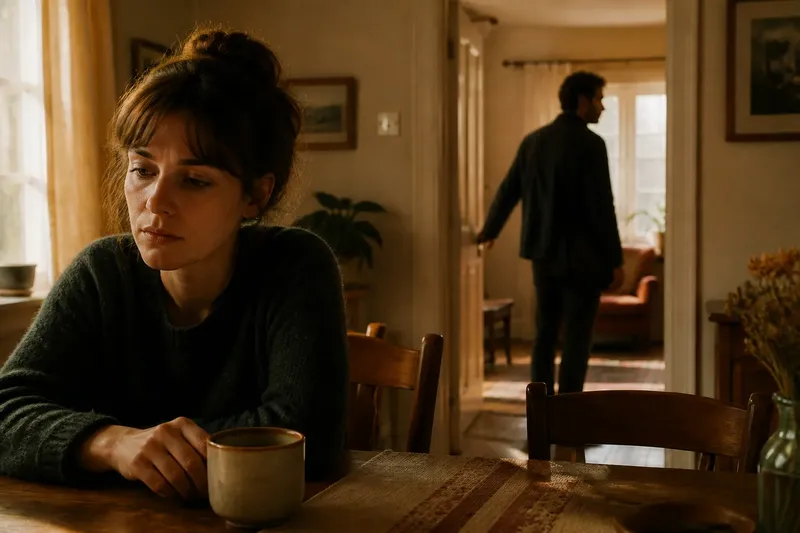
When a character hears unwelcome news, a close-up can make a tightened mouth feel unmistakable, while a view from across the room may leave you asking what the character thinks. Close-up versus distant screen performance is not simply a choice between clear emotion and hidden emotion: framing changes which parts of a performance you can read, and how confidently you can read them.
A useful way to notice that change is to watch for a week, returning to short scenes rather than trying to compare whole films at once. Keep the scene, the acting and the camera’s distance in view together. The aim is not to decide which framing is better, but to see what each allows the viewer to notice.
What does distance let you read?
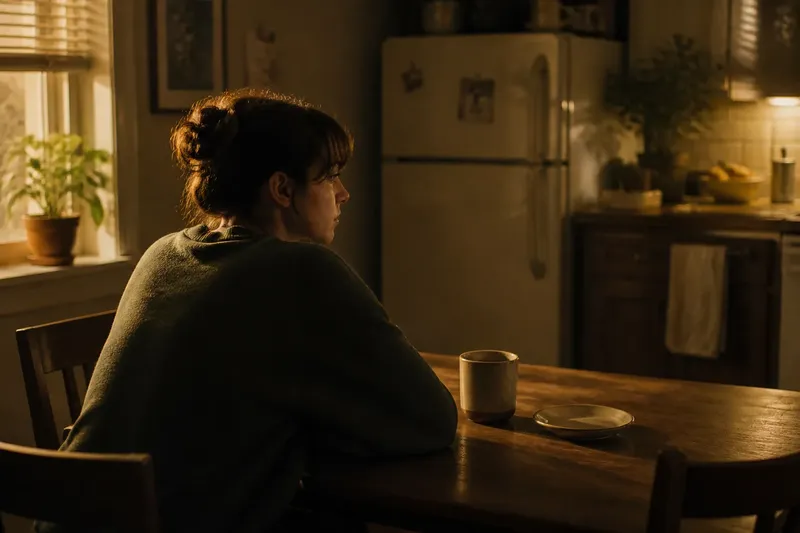
A close-up gives a face much of the screen. Small movements—a brief glance, a breath held back, a smile that arrives late—can become prominent. The actor need not make a large gesture for the reaction to register, because the framing directs attention towards facial detail.
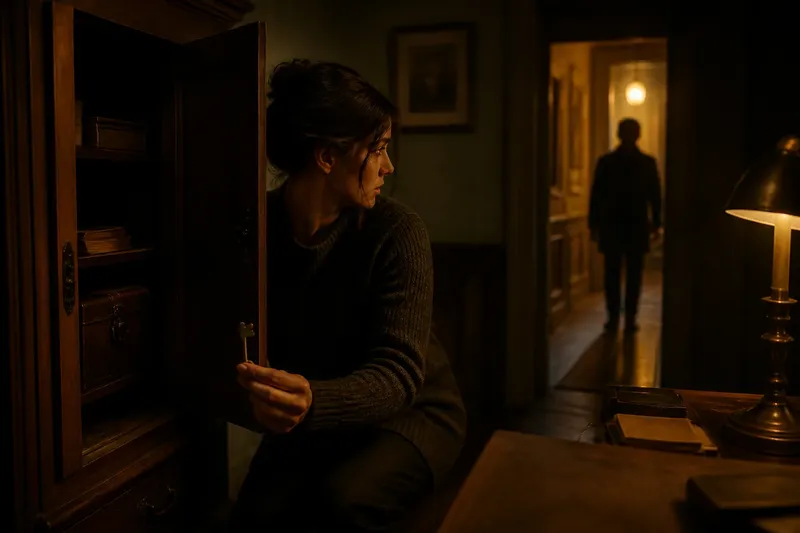
From farther away, the face occupies less of the image. A restrained change may be difficult to distinguish, but the character’s posture, movement and relation to other people or objects become more available. The viewer can notice, for instance, whether someone stays seated while others leave, or turns towards a doorway without crossing the room.
Neither distance supplies a direct reading of someone’s inner life. A close-up can show a twitch without settling what caused it; a distant view can show a character’s isolation without proving what they feel. Treat framing as part of the evidence the scene offers, not as a translation key.
How can you compare the two without losing the scene?
Choose a short exchange that contains a response: a question, a pause and an answer, or a piece of news followed by a change in behaviour. Watch it once at normal speed before writing down what you think the character has understood. This first impression gives you something to compare with, not a verdict to defend.
On the next viewing, note where the camera places you. Is the character’s face large in the frame, or can you also see their hands, stance and surroundings? Then ask what the actor does that you can actually observe: a turn, a held gaze, a shift in weight, or no visible change at all.
Say you choose an invented scene in which a character at a dining table learns that a friend will move away. At first, you read a close view of the character’s still face as controlled sadness; a wider view later shows them quietly pushing the untouched cup towards the empty chair. The new detail may make you consider an unspoken gesture of care, while still leaving the character’s precise feeling open.
What should you do during a week of viewing?
Spread the routine across several days so each viewing has a narrow purpose. Use the same scene when possible; changing scenes too quickly makes it harder to separate the effect of framing from differences in character, performance and circumstance.
- Day one: choose a scene. Find a brief moment with a readable reaction, and record your first interpretation in a sentence.
- Day two: watch the face. Notice the timing and size of visible facial movements. Write down the specific cue behind your reading rather than naming an emotion alone.
- Day three: watch the body. Attend to posture, hands, movement and stillness. Ask what those cues add when the face is small or partly turned away.
- Day four: map the distance. Note when the image comes close and when it gives the character more room. Consider what becomes visible or less legible at each point.
- Day five: consider other people and objects. Look at who shares the frame and what the character does in relation to furniture, a doorway or a held object.
- Day six: revise your reading. Rewatch the scene without pausing. Change your first interpretation only if a detail you noticed offers a reason to do so.
- Day seven: write a short account. Explain what the framing made easy to read, what remained uncertain and which observable cue mattered most.
If you miss a day, continue with the next viewing rather than trying to catch up by turning the exercise into a marathon. If the chosen scene has little change in camera distance, use a different scene for comparison, but keep the same questions about what the actor’s face and body make available.
Which details change with the framing?
Ask these questions when you want to sharpen your notes without reducing the performance to a single emotion.
Does a close-up always make a reaction clearer?
It makes facial detail more available, but availability is not the same as certainty. A still face may read as composure, shock or an effort to conceal feeling, depending on what came before and what the actor does next.
What can a distant performance show that a close-up cannot?
A wider view can make posture and spatial relationships part of the reaction. A character who does not approach someone, or who remains at the edge of a group, may communicate through placement as well as expression.
How do you tell whether a reaction is ambiguous?
Look for more than one plausible reading that fits the visible behaviour. If the same pause could suggest reluctance or careful attention, describe the cue and keep both possibilities open instead of treating uncertainty as a failure to understand.
What if the actor’s face is hard to see?
Shift your attention to the body and the character’s place in the scene. Stillness, a turn away or a change in distance from another person can carry meaning, though none needs to stand for one fixed emotion.
When does distance support ambiguity?
Ambiguity is not merely a reaction that the camera fails to show. A distant view can let several parts of a moment coexist: the character’s body, the person they face and the room that separates them. The viewer must decide which detail deserves attention, and that act of choosing can make the scene feel less settled.
Close framing can also preserve uncertainty by showing detail without explaining it. A fleeting smile may be visible yet difficult to interpret; the face comes close, but the character’s motive does not become transparent. Compare what the image reveals with what the story has established, and avoid treating proximity as access to private thought.
Use the week’s notes to make one precise claim about close-up versus distant screen performance: name the visible cue, describe how the framing presents it, and state what remains uncertain. That habit makes your reading more specific—and leaves room for the actor’s performance to resist a single answer.