Before the Film Credit Roll: How Screen Credits Found Their Place
How screen credits found their place reveals how opening and closing titles introduce a film’s makers, guide attention and shape the mood around its story.
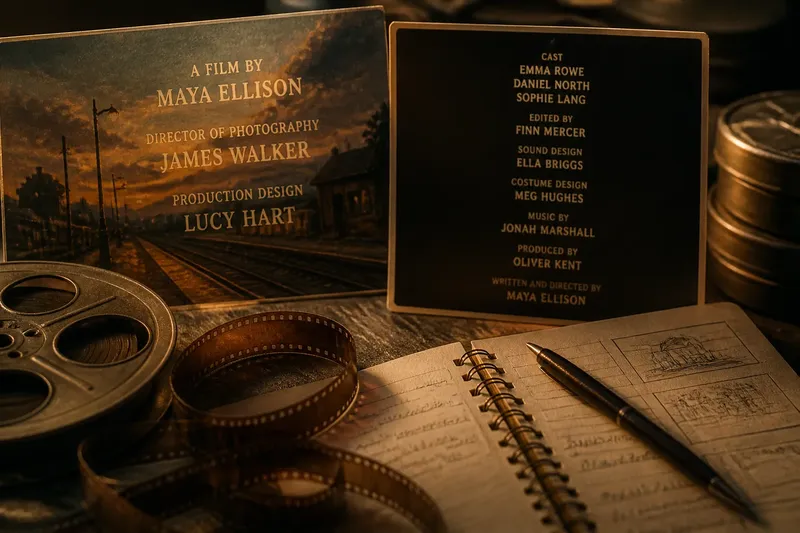
How screen credits found their place is visible in a simple contrast: one film begins with names over a designed image, while another moves straight into its first scene and waits until the end to list its makers. Those choices guide attention before and after the plot, making credits part of a film’s visual structure rather than a neutral list.
Why do screen credits name a film’s makers?
A screen credit identifies a person, role or organisation associated with a production. Early film programmes did not always present the makers’ names on screen, and surviving films and exhibition practices varied; it is safer to describe credit cards as one way some productions identified themselves than to claim that every early film followed a single pattern.
In films made on cards photographed as part of the image, lettering and layout were visible design decisions. A decorated title card could give a production a formal air, while plain lettering could keep the focus on the name and information. The card’s appearance did not, by itself, establish who had shaped the film or how much work each person had contributed.
As films came to include longer lists of credited roles, placement became a practical and expressive choice. A name at the beginning can carry a different emphasis from one in the closing roll, but credit position is not a reliable measure of a person’s total contribution.
What does an opening credit sequence do?
Opening credits create a threshold between the audience’s arrival and the film’s story. They can introduce the title and prominent makers, set a tone through typography and imagery, or allow a quieter interval before the first scene. A brief title card and an extended designed sequence serve different rhythms, so neither format suits every film.
Imagine a fictional drama that opens on an empty railway platform at dusk. If names appear over the station sign and the shot continues, the credits keep attention on the setting; if the film cuts to a separate graphic sequence, that break may feel like a deliberate prelude before the story begins.
How does title design turn names into visual storytelling?
A title sequence can combine lettering, colour, composition, movement and sound. These elements may echo a film’s setting or mood without explaining its plot. Hand-painted-looking type, for instance, can suggest an intimate or crafted visual register, while restrained lettering may leave more space for the underlying image.
Design and timing work together. A title that appears briefly over a busy image may be difficult to read; holding it longer can improve legibility but slow the passage. The designer’s visual choices and the editor’s decisions about rhythm and transition determine whether the sequence feels integrated with the film or separate from it.
Why do films save credits for the end?
Placing most names at the end lets a film reach its story quickly and can keep its opening uninterrupted. After the final scene, the credits also provide room to acknowledge work across departments, including editing, camera, costume, sound and production. A list can identify roles, though it cannot show the details of every person’s contribution.
The transition into closing credits affects how the ending feels. A cut to a plain background can create a sharp break; a continuing image, music or gradual fade can let the mood linger. Whatever the design, readable lettering and pacing help viewers follow the names.
What do viewers ask about screen credits?
Why are cast and crew names in a particular order?
Order can reflect production agreements, professional conventions and choices about prominence. It should not be treated as a ranking of effort or skill.
Why do some films have no opening credits?
A film may place most names at the end to begin its story without a long title passage. It may still show the title at the start, or introduce it later as part of the film’s design.
What is the difference between a title sequence and a credit roll?
A title sequence is a designed passage that presents a film’s title and often its opening credits, using choices such as imagery, typography and editing. A credit roll generally presents names in a continuing list, commonly after the story has ended.
Why do credits continue after the first names appear?
A production involves many roles beyond its most visible performers and creative leads. Later credits may also include acknowledgements and production information, which serve a different purpose from the opening names.
How can you read credits as part of the film?
Notice what appears behind the names, how the lettering enters and leaves, and whether the sequence feels separate from the story. Then watch for the transition: the first scene may begin after the credits, or the names may continue over action already under way.
For a useful comparison, imagine two fictional versions of the same quiet drama. In one, a title appears over the opening location and the cast names follow across the scene; in the other, the film starts with unbroken action and places the names in a restrained closing roll. The first makes the setting part of the introduction, while the second gives the story an immediate start and lets the credits accompany its ending.
How screen credits found their place is less a story of one universal historical change than a question of choices visible in each film. The next time a title appears, notice whether it asks you to pause, look closely at an image or move straight into the story; that small cue can clarify how the film wants its opening to feel.