The Information a Movie Withholds in Its First Scene
Learn how a film’s first-scene information gap can guide attention, build suspense and preserve clarity through visible clues rather than confusion.
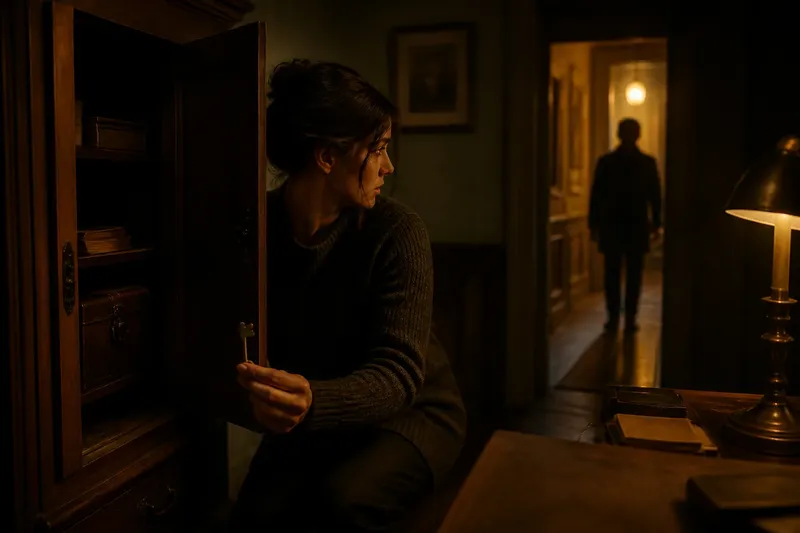
A character opens a locked cupboard, pauses, then hides the key as footsteps approach. The film has withheld what is inside, but the scene has still given you something to follow: a guarded object, a nervous action and an approaching threat. That is the useful tension in the information a movie withholds in its first scene: the viewer lacks an answer, not a direction.
For a screenwriter, director or attentive viewer, the practical question is not simply whether to explain everything at once. It is which missing fact can make the opening more active, and what the audience needs to see in the meantime. The right choice depends on the scene’s job: orienting us, creating a question, establishing a character or setting a promise the story can later fulfil.
What should the first scene make clear?
Clarity does not require a full account of the story. It requires enough bearings to let viewers interpret what happens next. A scene can leave a character’s name, history or motive unanswered while making the immediate situation legible: someone wants access, someone else resists, or a task must be completed before an interruption.
Think of orientation as the audience’s working map. It may include who is present, where they are, what action is underway and what might change if that action succeeds or fails. A film need not state each point in dialogue; a hand hovering over a departure ticket can establish a decision in progress more economically than an explanation of the character’s plans.
Before withholding anything, identify the scene’s smallest concrete action. If the action itself is hard to describe, the opening may need a clearer event rather than a deeper mystery. “A woman decides whether to leave” is a playable situation; “a strange feeling surrounds her” may not yet give the audience enough to read.
Which situation calls for a delayed answer?
Use a decision guide rather than a general rule. The same omission that sharpens one opening can make another feel evasive, because suspense depends on what the scene already lets viewers understand.
- If the opening is about a choice: delay the reason behind it, but show the choice and its immediate cost. Viewers can wonder why a driver keeps the engine running outside a house while still understanding that leaving or going in matters.
- If the opening is about danger: delay the source or full nature of the threat, but reveal a sign that danger is near. A door that slowly swings open is a readable warning; unexplained unease without a visible change gives the audience little to track.
- If the opening introduces a relationship: delay the history between the people, but make their present behaviour specific. A guest setting a second cup down without asking can suggest familiarity, expectation or a strained routine, depending on what follows.
- If the opening introduces an unfamiliar place or system: delay the larger explanation, not every local rule. Show a person trying to pass through a checkpoint and being turned back, then let the audience learn why that boundary exists.
- If the opening is chiefly about a character’s voice or temperament: delay biographical explanation only if an action already reveals a pattern. A clerk carefully correcting a name while ignoring a growing queue tells us more than an unexplained string of quirks.
These choices work because each leaves a question attached to an observable event. The viewer can make a provisional guess, notice whether the next detail supports it and revise the guess as the scene develops. That small act of interpretation creates involvement without requiring the audience to solve the whole film immediately.
How can a clue orient viewers without giving the answer away?
A clue should do two jobs: point towards the missing information and make sense in the moment before its meaning is known. It might be an object handled with unusual care, a reaction that arrives too quickly, a space another character avoids, or a repeated action that changes slightly. The clue is not a secret code; it is visible evidence whose importance is not yet settled.
Give the clue a clear place in the scene. If viewers cannot tell what changed, they cannot connect it to the question. A character may glance at a sealed envelope when someone mentions a particular town; the glance is legible, while the envelope’s contents and the character’s reason for reacting remain open.
Then provide a second point of contact. The next clue need not confirm the first, but it should belong to the same line of attention. A character hides the envelope, or another person recognises its handwriting. That recurrence tells viewers the detail matters, rather than asking them to remember every object and gesture equally.
Imagine an invented opening in which a night caretaker mops a corridor but leaves one wet footprint untouched. The starting point is simple: the corridor is empty, and the caretaker is cleaning. The action taken is to preserve that footprint and check the exit door; the expected observable result is that viewers notice the print as deliberate and wonder who made it, while still understanding the immediate task and location.
The footprint would become mere obscurity if the film offered no reason to notice it, no response to it and no later connection. Conversely, explaining at once who made it and why may close the question before the scene has developed. The useful middle ground is to show that the clue affects behaviour while withholding the explanation for that behaviour.
When does suspense become confusion?
Suspense asks, “What will happen?” or “Why did that happen?” Confusion asks the viewer to guess what the scene is even showing. The distinction is not whether every detail is explained; it is whether the audience can follow the immediate action and recognise which uncertainty the film is inviting them to hold.
Three questions can help diagnose an opening:
Can viewers identify the immediate action?
They should be able to describe what someone is doing, even if they cannot explain the person’s deeper motive. If the central action is not apparent, clarify the task, object or obstacle before adding another withheld fact.
Is there a visible reason to keep watching?
A change in behaviour, a looming interruption or a consequential choice gives the question forward motion. An unexplained object that receives no attention may register as decoration rather than a promise.
Does the scene distinguish a clue from background detail?
Emphasis can come from framing, a pause, a repeated glance or a character’s response. The clue need not be underlined, but the scene should give viewers some basis for treating it as relevant.
Will a later answer change the meaning of what we have already seen?
A satisfying reveal does more than supply a missing label; it makes an earlier action newly understandable. If the answer could be delivered without changing how the opening reads, the withheld fact may not have been doing much dramatic work.
What should the scene reveal before it ends?
An opening need not resolve its central question, but it should usually alter the audience’s understanding of the situation. Perhaps a quiet visitor has been waiting for someone who is already in the room. Perhaps the apparent threat is not the person approaching but the object that person carries. A turn can deepen the mystery while making the scene’s immediate stakes more precise.
One useful test is to state the audience’s question at the beginning and again at the end. At first, the question might be “Why is the caretaker protecting that footprint?” By the end, it might become “Who was expected to arrive, and why is the caretaker afraid of the door?” The shift shows that the scene has supplied a clue rather than simply stretching the original unknown.
Do not make every unanswered detail compete for attention. If the opening introduces an unexplained footprint, a coded message, a missing person and an unfamiliar machine, viewers may have no way to judge which thread matters. Choose one dominant gap; let secondary details support the scene’s atmosphere or action without demanding equal interpretive effort.
How should the answer arrive later?
Plan the withheld fact alongside its eventual consequence. If the answer is that a character has been protecting someone, the reveal should make earlier choices—such as refusing to open a door or keeping a name off a list—read differently. The story earns the delay when the new information reorganises what viewers thought they understood.
That does not mean every clue must point to one inevitable solution. A fair opening can permit more than one reasonable interpretation, provided the eventual answer fits the evidence the film chose to emphasise. Surprise works best when viewers can look back and recognise how the scene guided their attention, even if they did not predict the outcome.
For the information a movie withholds in its first scene, favour the fact whose absence creates a focused question while leaving the action visible. Keep the viewer oriented by showing what a character does, what changes and which detail draws a response. The answer can wait; the audience should not have to wait to know what to watch.